
Why AI Website Builders Are Dominating in 2026
A few years ago, building a professional website meant hiring a designer, a developer, a copywriter, and sometimes even an SEO specialist before your website was ready for visitors. Today, that entire process has changed dramatically. Thanks to rapid advances in artificial intelligence, businesses can generate an attractive website in minutes by simply describing what they want in plain English. Whether you’re launching a local service company, an online store, a portfolio, or a startup landing page, an AI Website Builder 2026 solution can handle much of the heavy lifting automatically.
This transformation isn’t happening by accident. AI has become significantly better at understanding design principles, user behavior, search engine optimization, and conversion-focused layouts. Instead of selecting a template and manually editing every section, users now describe their business, upload a logo, choose their preferred colors, and let AI generate complete pages with relevant content, responsive layouts, SEO-friendly structures, and even stock imagery. Many builders now integrate AI copywriting, image generation, logo creation, chatbot integration, and automated SEO recommendations directly into the platform.
Businesses also appreciate the financial advantage. Hiring an agency for a professionally designed website can cost anywhere from several hundred to several thousand dollars depending on complexity, whereas many AI website builders start at just a few dollars per month while including hosting, SSL certificates, domains, and ongoing maintenance. This lower barrier has encouraged entrepreneurs, freelancers, restaurants, consultants, and small businesses to establish an online presence much faster than ever before. AI has effectively democratized website creation, allowing people with no coding experience to compete online with visually appealing and functional websites.
The Rise of AI Website Creation
Artificial intelligence has quietly evolved from a simple automation tool into a genuine creative assistant. Modern AI Website Creation platforms don’t merely assemble predefined templates—they interpret business descriptions, analyze industry trends, recommend layouts based on user intent, and generate highly personalized websites within minutes.
Today’s AI website generators can create compelling headlines, write service descriptions, suggest images, organize navigation menus, optimize page structures for search engines, and even recommend conversion-focused call-to-action buttons. The result is a website that often looks as though it was professionally designed, even though it was generated automatically. For entrepreneurs launching quickly, this speed is incredibly valuable.
Another significant advancement is the integration of AI assistants after launch. Several leading builders now include AI tools that continuously help users update blog posts, optimize SEO, rewrite content, generate marketing copy, and even analyze visitor behavior. Instead of viewing AI as a one-time website creator, companies are increasingly treating it as an ongoing digital marketing assistant. According to recent industry updates, platforms like Hostinger have expanded their AI ecosystem with AI Writers, AI SEO assistants, AI Heatmaps, and conversational website creation, making website management much simpler for beginners.
Perhaps the biggest reason behind this growth is confidence. Small businesses no longer need to worry about coding languages, responsive design, hosting configuration, or SSL installation. AI handles these technical requirements behind the scenes, allowing owners to focus on growing their business rather than learning web development.
What Makes a Great AI Website Builder?
Choosing the Best AI Website Builder isn’t simply about selecting whichever platform generates a website the fastest. Speed certainly matters, but long-term success depends on flexibility, SEO capabilities, scalability, design quality, performance, and the ability to customize your website as your business grows.
A quality AI website builder should provide much more than attractive templates. It should create clean, mobile-responsive pages that load quickly and follow modern accessibility guidelines. Search engines increasingly reward websites that offer excellent user experiences, meaning AI-generated websites must also perform well technically. Fast loading speeds, optimized images, semantic HTML structures, and proper heading hierarchy all contribute toward stronger rankings.
Modern businesses also expect integrated marketing tools. Email marketing, analytics integration, CRM connectivity, appointment booking, ecommerce functionality, blogging, AI content generation, multilingual support, and social media integrations have become standard expectations rather than premium add-ons. Builders that combine these features into one ecosystem significantly reduce operational complexity for small businesses. Hostinger, for example, now bundles hosting, AI generation, SEO tools, domains, ecommerce, AI assistants, and marketing integrations into a single platform.
Equally important is ownership. Some AI builders offer incredible convenience but limit advanced customization or migration options later. Businesses expecting substantial future growth should evaluate whether the platform allows custom code, API integrations, advanced SEO controls, structured data editing, and external tool compatibility before making a long-term commitment.
SEO and Performance: Can AI Websites Rank on Google?
One of the biggest concerns surrounding AI Web Design is whether AI-generated websites can actually rank well in search engines. The simple answer is yes—but only when the platform follows modern SEO best practices and the content provides genuine value.
Search engines don’t rank websites based on whether AI helped build them. Instead, they evaluate quality, relevance, page experience, expertise, user satisfaction, and technical performance. An AI-generated website that offers useful information, loads quickly, has proper metadata, structured headings, optimized images, and earns quality backlinks can absolutely compete against traditionally developed websites.
That said, AI still has limitations. Automatically generated copy often requires human editing to sound more authentic, incorporate industry expertise, and differentiate from competitors. Businesses relying entirely on default AI content may struggle because many websites begin looking similar. The most successful websites combine AI efficiency with human creativity, industry knowledge, and strategic SEO planning.
Current AI builders increasingly recognize this challenge by integrating dedicated SEO assistants that recommend keyword placement, improve metadata, analyze readability, generate blog content, and even suggest improvements based on evolving search trends. These enhancements make AI websites much more competitive than they were only a couple of years ago.
The 10 Best AI Website Builders in 2026
Artificial intelligence has transformed website creation from a lengthy development project into a process that often takes less than an hour. Instead of dragging and dropping every section manually, modern AI builders can generate layouts, write content, create images, optimize SEO settings, and even recommend improvements based on your industry. However, not every platform delivers the same experience.
Some AI builders are designed for beginners who simply need an attractive online presence, while others are built for ecommerce businesses, agencies, SaaS startups, or creators who need greater flexibility. Pricing, customization, SEO capabilities, scalability, and design quality vary significantly between platforms.
Below is an expert review of the 10 Best AI Website Builders in 2026, highlighting their strengths, weaknesses, pricing, and the types of users they serve best.
1. Hostinger AI Website Builder
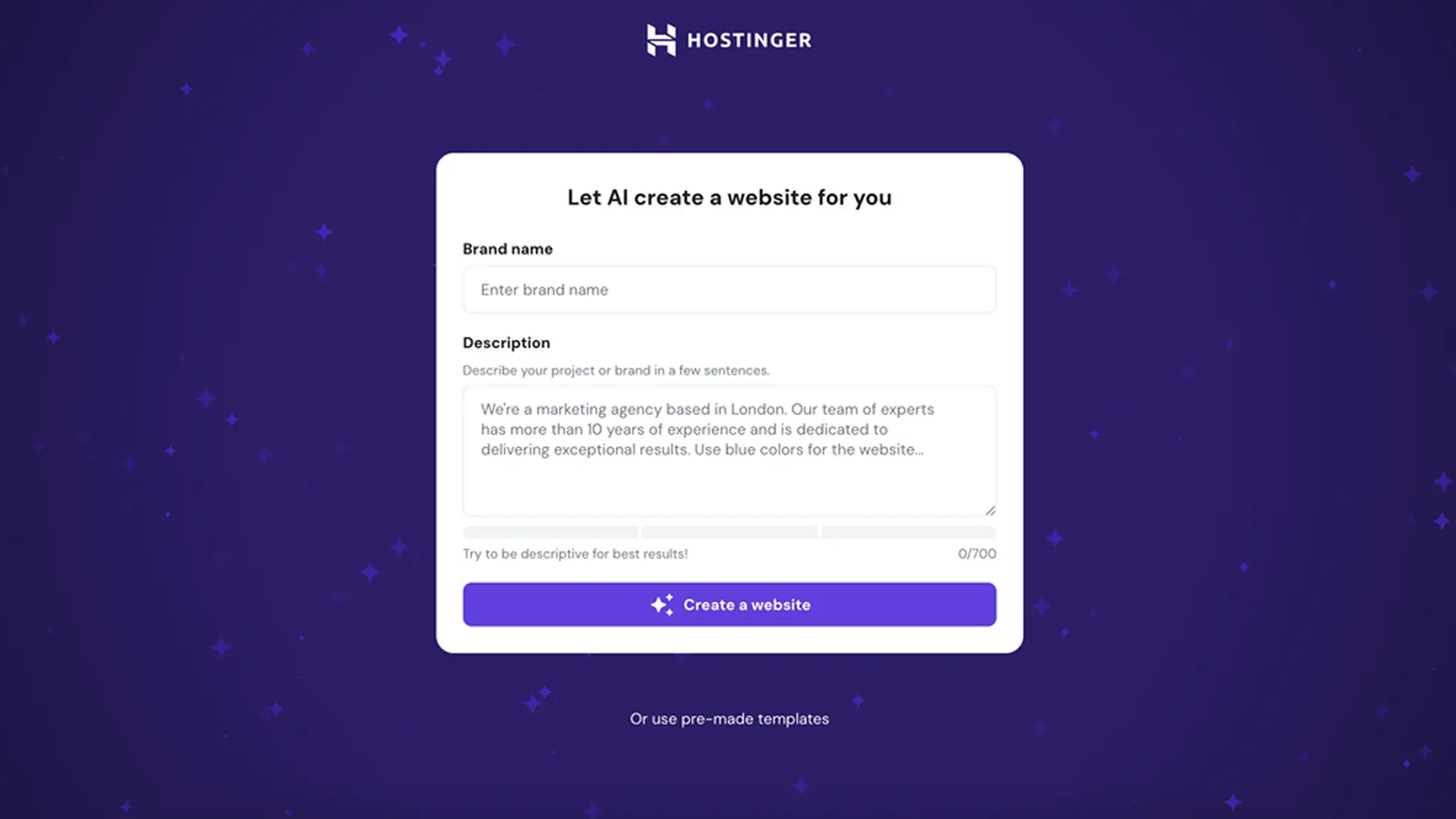
Hostinger has rapidly become one of the strongest contenders in the AI website builder market. It combines affordability with a surprisingly advanced suite of AI tools that go well beyond basic website generation. Instead of simply producing a template, Hostinger asks a few questions about your business and generates an entire website complete with professionally written content, royalty-free images, color palettes, contact forms, and SEO-friendly page structures.
One of Hostinger’s biggest advantages is its all-in-one ecosystem. Hosting, SSL certificates, domains, AI content writing, AI image generation, AI logo creation, AI heatmaps, ecommerce functionality, blogging, and analytics are all integrated into a single dashboard. This eliminates the need to purchase multiple services separately, making it particularly attractive for startups and small businesses looking to launch quickly without technical knowledge.
Performance is another area where Hostinger excels. Websites generated through the platform typically achieve excellent loading speeds, responsive mobile layouts, and clean page structures that align well with Google’s Core Web Vitals. The AI assistant also continues helping after launch by suggesting SEO improvements, rewriting content, and generating additional pages as your business grows.
Best For: Small businesses, freelancers, local services, portfolios, startups
Pros
- Excellent value for money
- Fast AI website generation
- Built-in AI writer and image generator
- Ecommerce support
- Excellent page speed
Cons
- Limited advanced customization compared to custom development
- Complex enterprise websites may outgrow the platform
2. Wix AI
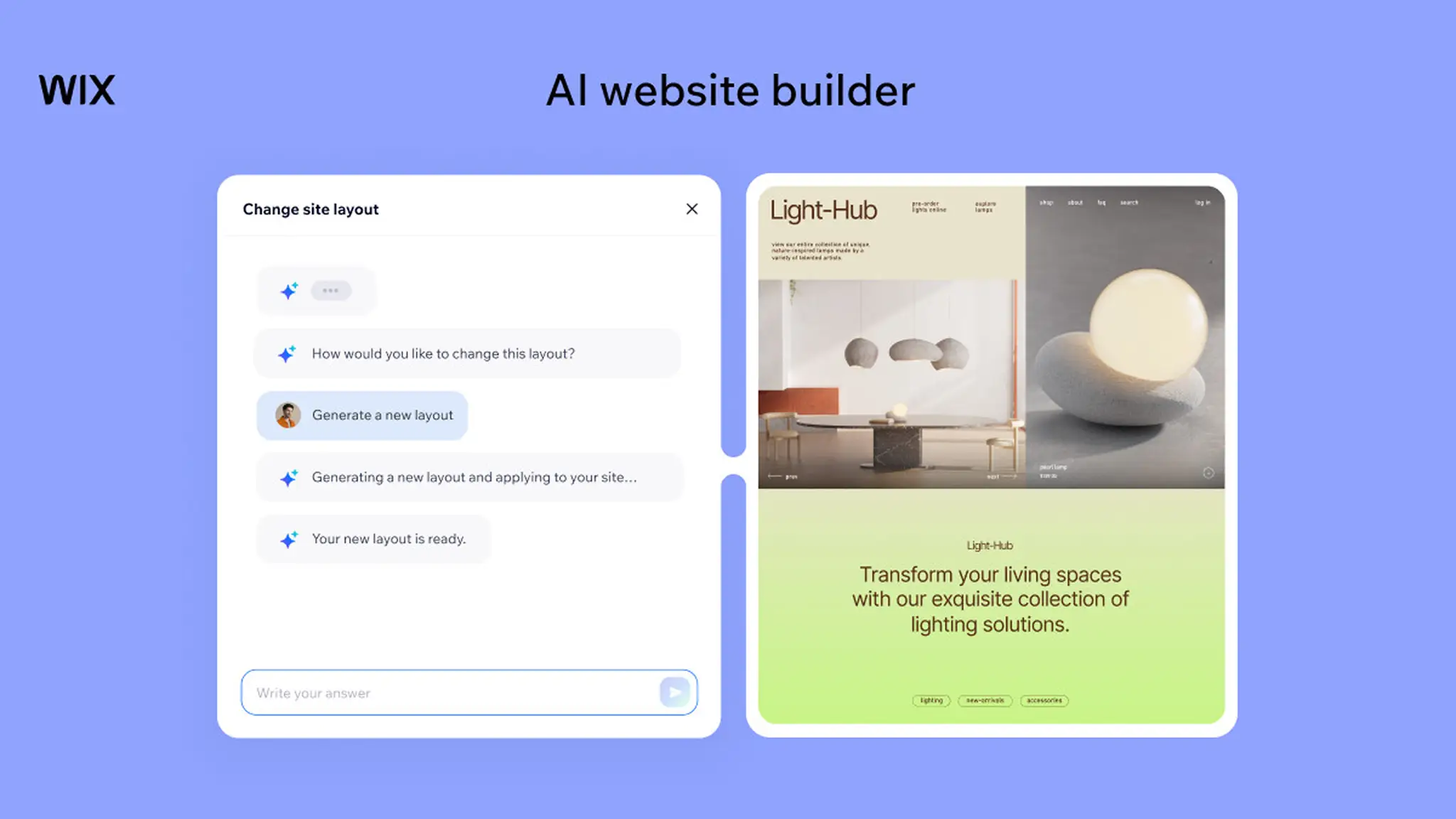
Wix has invested heavily in artificial intelligence over the past few years, and its latest AI website creation experience is one of the most polished available. Instead of relying solely on templates, Wix AI holds a conversational interaction with the user, asking about business goals, preferred style, target audience, and desired functionality before generating a personalized website.
The platform stands out because of its enormous ecosystem. Users gain access to hundreds of integrations, booking systems, ecommerce tools, membership portals, blogging features, email marketing, CRM functionality, and AI-powered business assistants. Even after launching, users can request changes simply by chatting with the AI, making updates significantly easier than traditional editors.
Where Wix shines is flexibility. Beginners appreciate its simplicity, while experienced users can still customize layouts, animations, and design elements extensively. The only downside is that heavily customized websites can sometimes become more difficult to maintain as projects grow larger.
Best For: Small businesses, agencies, service providers, restaurants, personal brands
Pros
- Powerful conversational AI
- Excellent app marketplace
- Strong ecommerce features
- High-quality templates
- Beginner-friendly interface
Cons
- Can become expensive with premium add-ons
- Large websites may require manual optimization
3. Squarespace AI
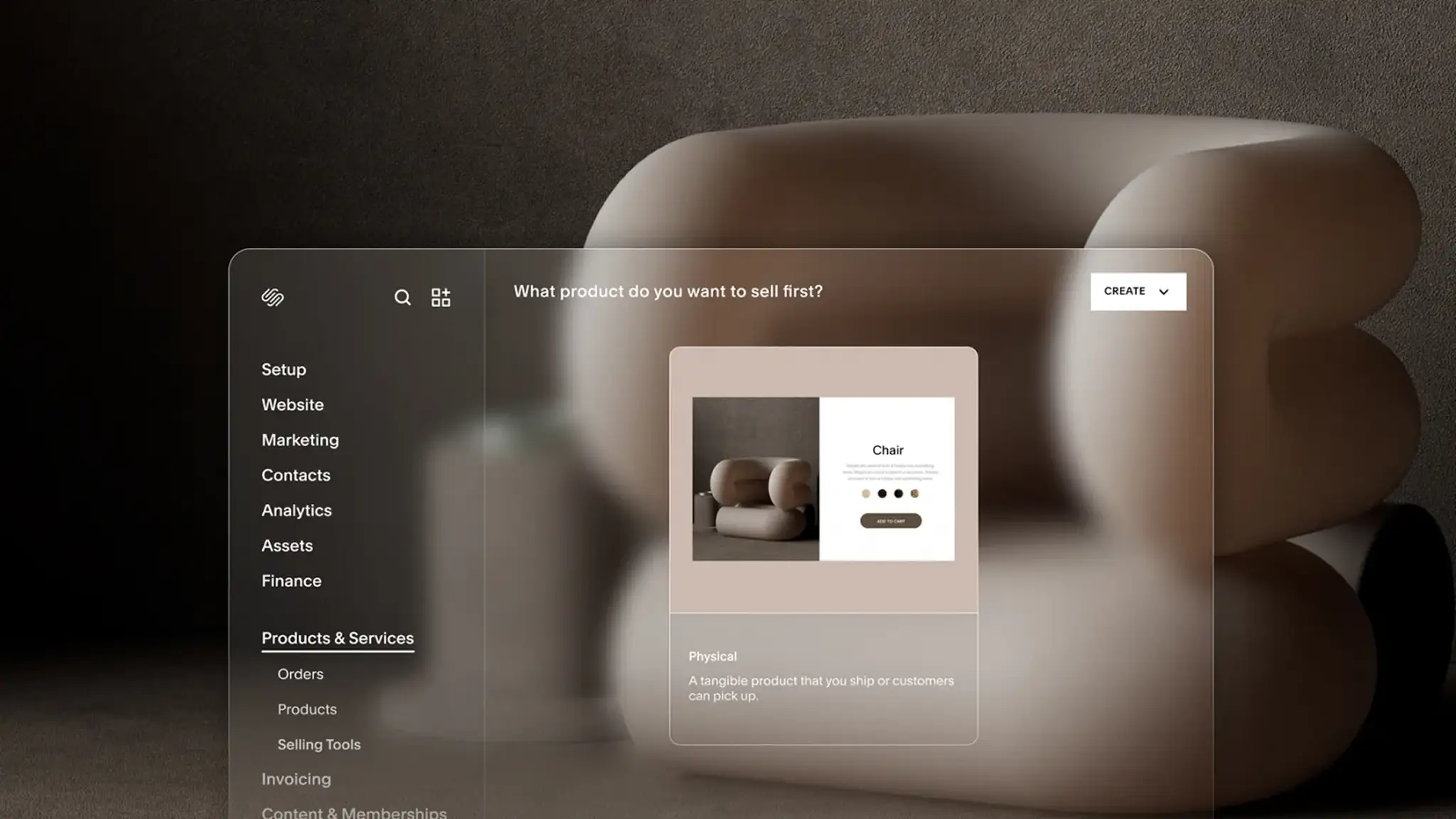
Squarespace has always been known for premium visual design, and its AI enhancements build upon that reputation. Instead of focusing purely on speed, Squarespace AI prioritizes aesthetics, making it one of the best choices for photographers, architects, artists, luxury brands, consultants, and creative professionals.
The AI assists users in writing website copy, organizing page layouts, generating marketing text, and recommending design improvements while maintaining the elegant appearance Squarespace is famous for. Typography, spacing, animations, and image presentation are consistently excellent, giving websites a polished, high-end look immediately after generation.
Although Squarespace offers ecommerce functionality and blogging capabilities, it is generally better suited for content-driven or visually focused businesses than large-scale online stores with thousands of products.
Best For: Designers, photographers, luxury brands, creatives
Pros
- Premium design quality
- Beautiful templates
- Strong blogging platform
- AI copywriting assistance
- Excellent portfolio support
Cons
- Fewer third-party integrations
- Limited advanced ecommerce flexibility
4. Shopify Magic
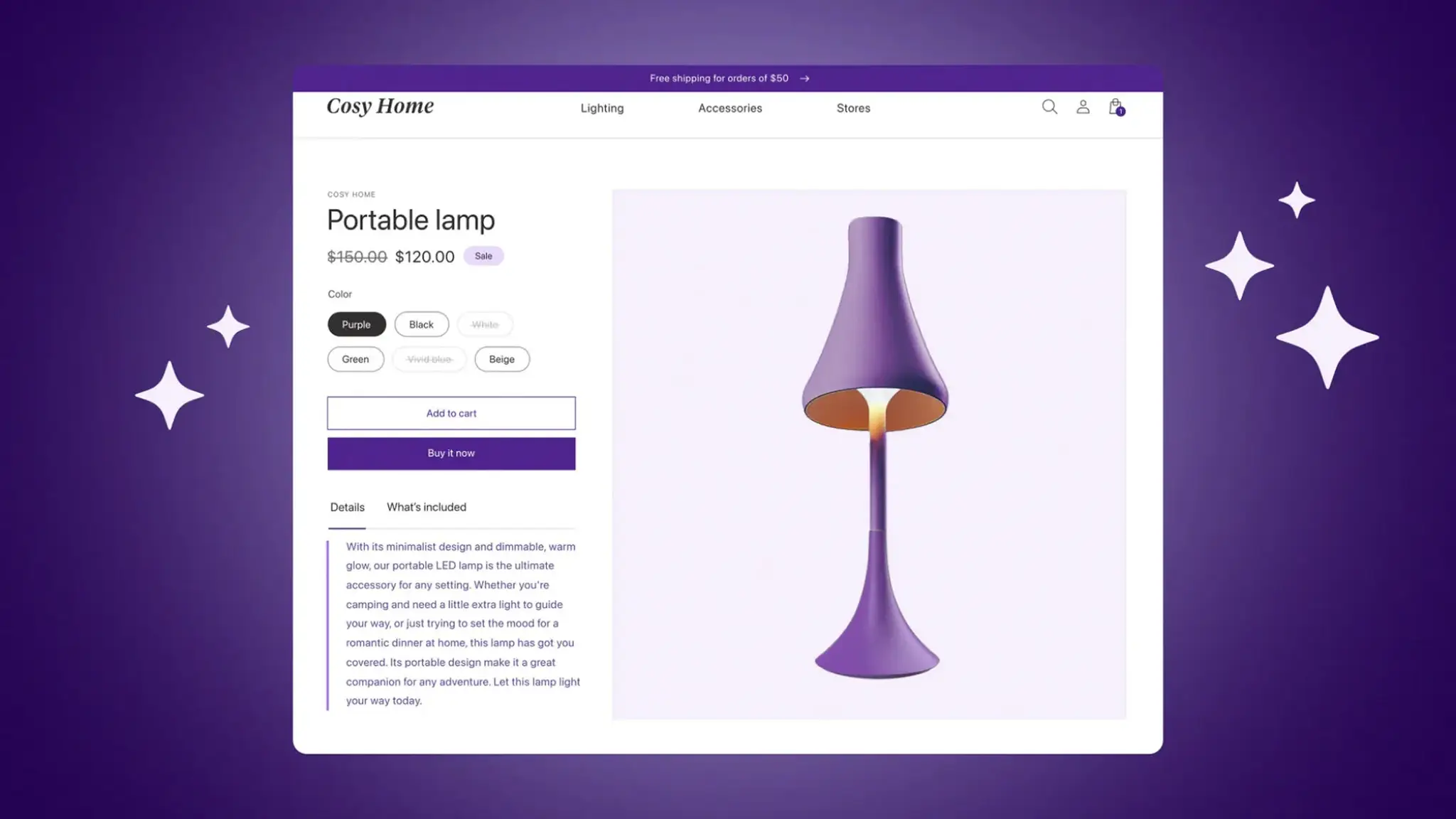
When ecommerce is the priority, Shopify remains one of the strongest choices available. Shopify Magic uses artificial intelligence to help merchants generate product descriptions, optimize listings, create email campaigns, recommend discounts, and automate customer interactions.
Unlike general-purpose AI website builders, Shopify focuses almost entirely on online selling. Inventory management, shipping integrations, payment gateways, abandoned cart recovery, marketing automation, and analytics are significantly more advanced than what most general builders offer.
Businesses expecting serious online sales often prefer Shopify because it scales effortlessly from a handful of products to catalogs containing tens of thousands of items without sacrificing performance.
Best For: Ecommerce businesses
Pros
- Industry-leading ecommerce tools
- Excellent scalability
- AI product description generation
- Large app ecosystem
- Reliable hosting
Cons
- Monthly costs increase with apps
- Less suitable for informational websites
5. Framer AI
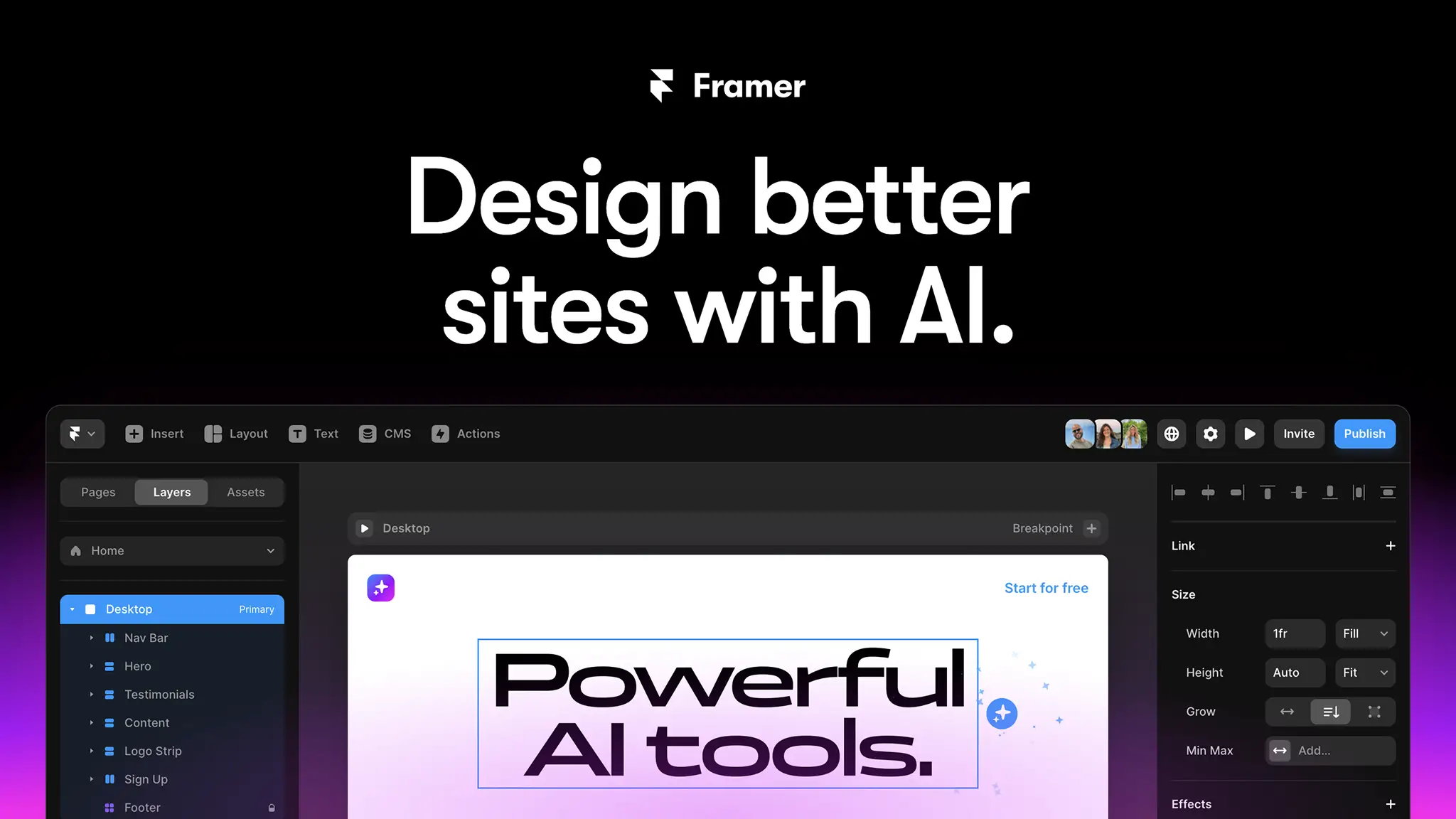
Framer AI has gained immense popularity among startups, SaaS companies, and modern digital agencies. Unlike traditional website builders, Framer focuses on creating visually stunning, highly animated, responsive websites with minimal effort.
Users simply describe the website they want, and the AI generates layouts featuring sophisticated typography, smooth animations, responsive components, and clean modern interfaces. Designers especially appreciate Framer because generated websites often resemble custom-designed products rather than template-based pages.
Although Framer excels in design quality, users requiring complex ecommerce or large CMS structures may eventually need additional integrations.
Best For: SaaS startups, agencies, landing pages
Pros
- Outstanding visual quality
- Smooth animations
- Fast publishing
- Modern responsive layouts
- AI-assisted design workflow
Cons
- Limited ecommerce
- Smaller plugin ecosystem
6. Durable AI
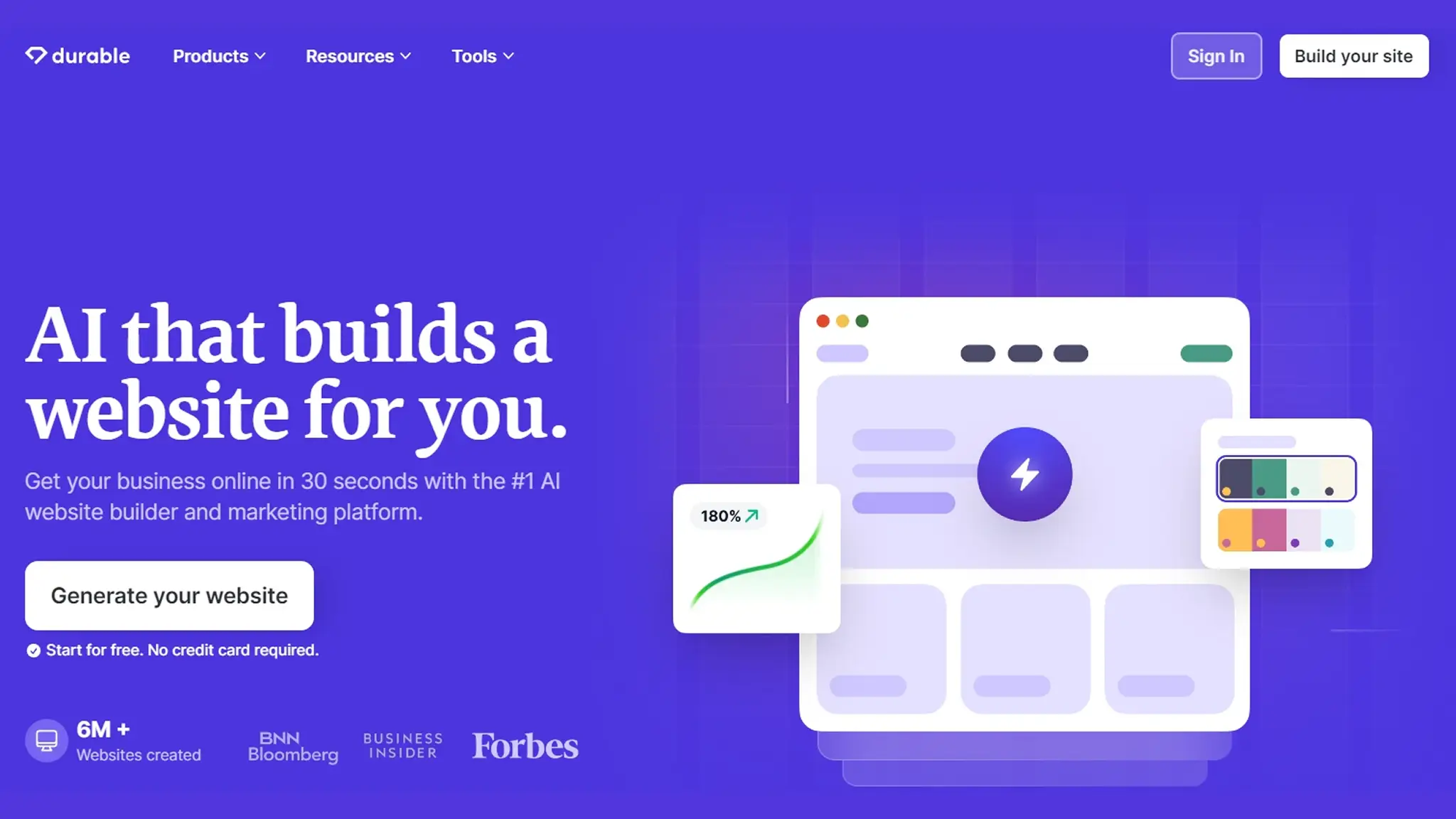
Durable takes a unique approach by targeting businesses that simply want to get online immediately. Within minutes, users receive a complete website, AI-generated copy, contact forms, CRM tools, invoicing, and basic business management functionality.
Its simplicity is its biggest advantage. Electricians, plumbers, consultants, cleaning companies, tutors, and local service providers can launch a professional website without learning anything about web design.
While Durable lacks deep customization, it excels as an affordable “website-in-a-day” solution.
Best For: Local businesses and freelancers
Pros
- Extremely fast setup
- Built-in CRM
- AI copywriting
- Affordable pricing
- Easy management
Cons
- Limited design flexibility
- Fewer advanced SEO controls
7. 10Web AI Builder
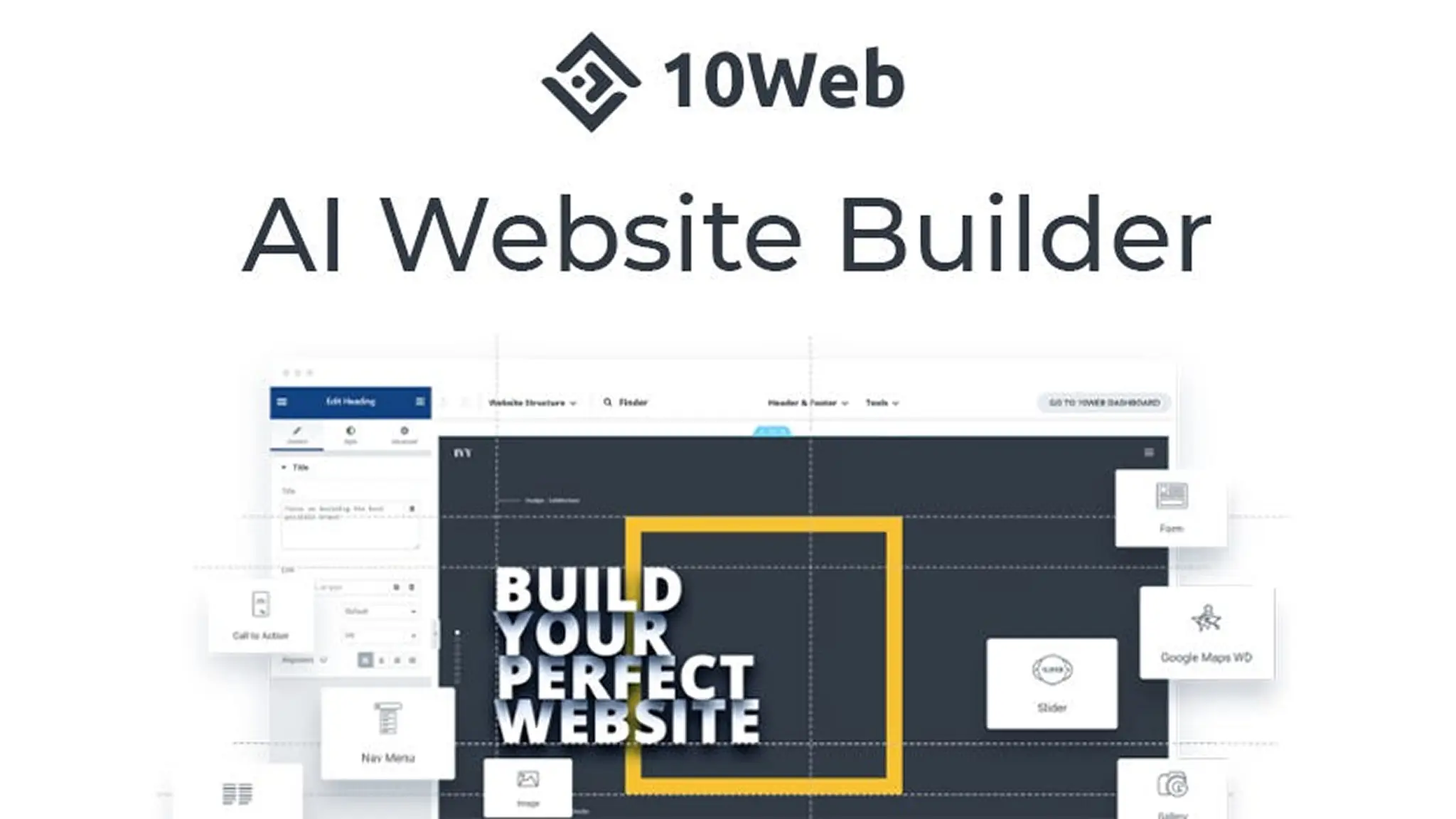
10Web has become particularly popular among WordPress users because it combines AI website generation with WordPress flexibility. Rather than replacing WordPress, it automates much of the design process while allowing users to retain access to plugins, themes, and custom functionality.
The AI can recreate existing websites, generate entirely new layouts, and optimize hosting performance simultaneously. Agencies managing multiple websites often appreciate this hybrid approach because they receive automation without sacrificing the flexibility WordPress is known for.
For businesses planning long-term growth, 10Web provides a good balance between AI convenience and traditional website control.
Best For: Agencies, WordPress users, growing businesses
Pros
- WordPress compatibility
- AI redesign capabilities
- Good performance
- Strong SEO flexibility
- Agency-friendly
Cons
- Learning curve for beginners
- Premium plans can become expensive
8. Webflow AI
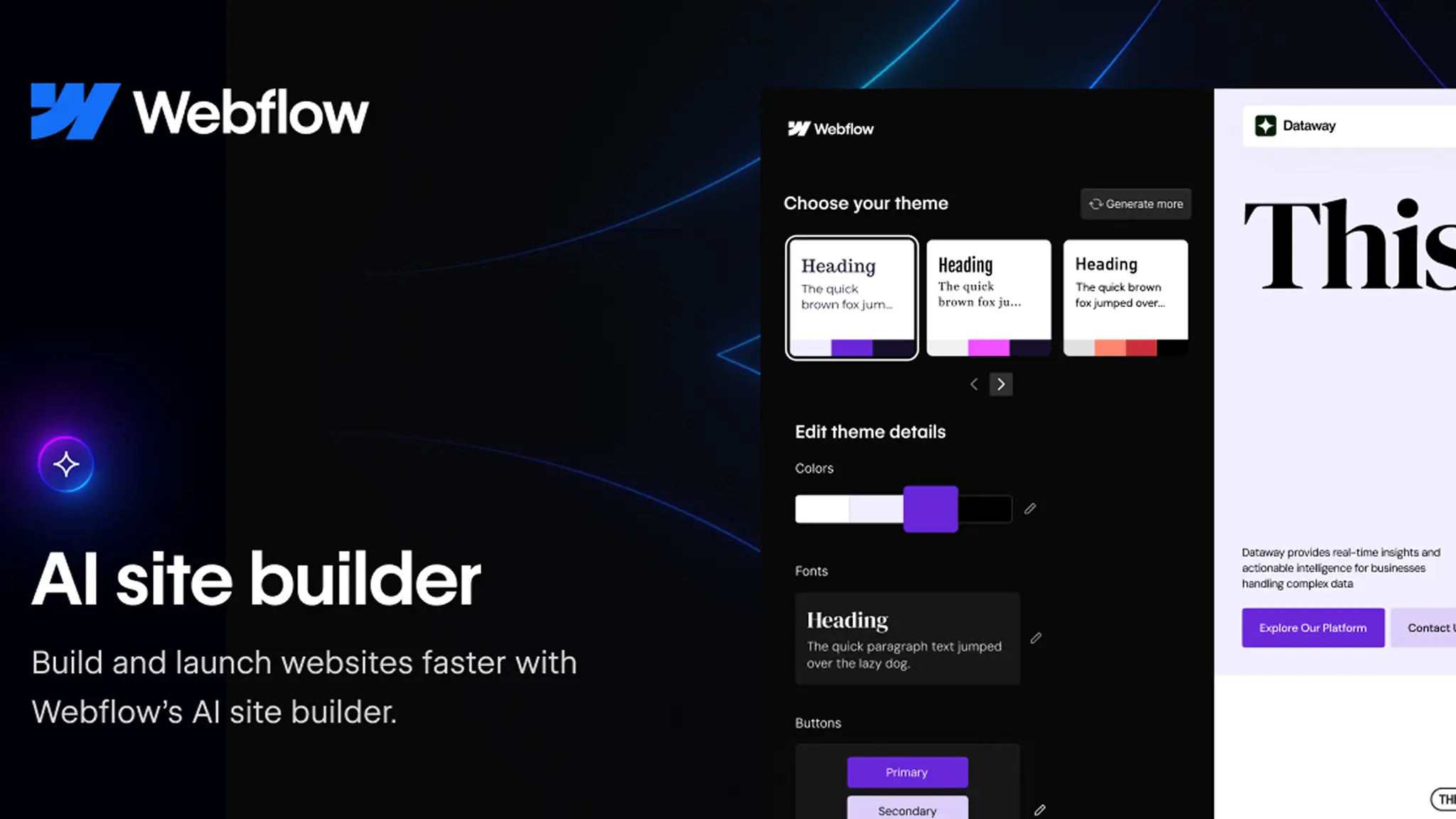
Webflow has traditionally been the choice for professional designers who wanted complete creative freedom without extensive coding. The addition of AI has significantly accelerated workflows by generating layouts, content suggestions, and design recommendations while preserving Webflow’s advanced customization capabilities.
Unlike beginner-focused builders, Webflow allows developers and designers to create highly interactive websites with precise control over animations, CMS structures, and responsive behavior.
Businesses that prioritize unique branding often choose Webflow because websites rarely resemble generic templates.
Best For: Designers, agencies, startups
Pros
- Professional-grade design control
- Powerful CMS
- Advanced animations
- Excellent performance
- Flexible customization
Cons
- Steeper learning curve
- Higher pricing
9. Elementor AI
Elementor remains one of the world’s most widely used website builders for WordPress, and its AI features significantly enhance productivity. AI can generate text, create CSS, write HTML snippets, suggest layouts, improve existing copy, and assist with coding tasks directly inside the editor.
For WordPress professionals, Elementor AI doesn’t replace the designer—it becomes an intelligent assistant that speeds up repetitive work while maintaining full customization capabilities.
Businesses already invested in WordPress often find Elementor AI to be one of the most practical choices because it integrates naturally into existing workflows.
Best For: WordPress websites and agencies
Pros
- Powerful AI assistant
- Excellent customization
- Large ecosystem
- WooCommerce support
- Strong community
Cons
- Requires WordPress knowledge
- Hosting managed separately
10. Jimdo AI
Jimdo has continued refining its AI-powered website creation experience with a strong emphasis on simplicity. New users answer a short series of questions, and the AI produces a clean, responsive website tailored to their business type.
Although Jimdo lacks some of the advanced features found in larger competitors, it remains an attractive option for freelancers, consultants, and very small businesses that prioritize ease of use over extensive customization.
The platform includes basic ecommerce, blogging, SEO tools, and responsive templates, making it suitable for straightforward business websites.
Best For: Freelancers and small businesses
Pros
- Very easy to use
- Affordable
- Quick setup
- Good mobile responsiveness
Cons
- Limited scalability
- Fewer advanced features
AI Website Builder Comparison Table
| Platform | Best For | AI Quality | SEO | Ecommerce | Ease of Use | Overall Rating |
|---|---|---|---|---|---|---|
| Hostinger AI | Small Business | ★★★★★ | ★★★★★ | ★★★★☆ | ★★★★★ | 9.8/10 |
| Wix AI | General Websites | ★★★★★ | ★★★★☆ | ★★★★☆ | ★★★★★ | 9.6/10 |
| Squarespace AI | Creatives | ★★★★☆ | ★★★★☆ | ★★★★☆ | ★★★★☆ | 9.3/10 |
| Shopify Magic | Ecommerce | ★★★★★ | ★★★★★ | ★★★★★ | ★★★★☆ | 9.8/10 |
| Framer AI | Startups | ★★★★★ | ★★★★☆ | ★★★☆☆ | ★★★★☆ | 9.4/10 |
| Durable AI | Local Businesses | ★★★★☆ | ★★★☆☆ | ★★★☆☆ | ★★★★★ | 9.1/10 |
| 10Web AI | WordPress | ★★★★☆ | ★★★★★ | ★★★★☆ | ★★★★☆ | 9.4/10 |
| Webflow AI | Agencies | ★★★★★ | ★★★★★ | ★★★★☆ | ★★★☆☆ | 9.5/10 |
| Elementor AI | WordPress | ★★★★☆ | ★★★★★ | ★★★★★ | ★★★★☆ | 9.6/10 |
| Jimdo AI | Beginners | ★★★★☆ | ★★★☆☆ | ★★★☆☆ | ★★★★★ | 8.9/10 |
Are AI Website Builders Good for SEO?
One of the biggest questions businesses ask before choosing an AI Website Builder 2026 is whether an AI-generated website can actually rank on Google. The short answer is yes, but success depends on much more than the tool itself.
Search engines don’t penalize a website simply because AI helped create it. What matters is whether the website provides valuable, original, and trustworthy information. Google’s guidance continues to emphasize helpful content that demonstrates expertise and satisfies user intent. A website built with AI can rank extremely well if it is properly optimized, technically sound, and regularly updated with useful content.
Modern AI website builders have become much better at handling technical SEO automatically. Most leading platforms now generate mobile-responsive layouts, optimize image sizes, create XML sitemaps, include SSL certificates, and allow users to customize page titles, meta descriptions, alt text, and URL structures. These features give businesses a solid SEO foundation without requiring technical expertise.
However, AI still has limitations. Automatically generated content often sounds generic and lacks the unique insights that help websites stand out. Businesses should always review AI-written content, add real-world experience, include original case studies, customer testimonials, and answer industry-specific questions. Search engines reward websites that demonstrate genuine expertise, and human refinement remains one of the best ways to achieve that.
Another important factor is website speed. Search engines increasingly prioritize user experience through Core Web Vitals. Faster websites tend to retain visitors longer, reduce bounce rates, and improve conversion rates. Many AI builders now optimize hosting and caching automatically, but businesses should still compress images, avoid unnecessary scripts, and monitor performance using tools like Google PageSpeed Insights.
For businesses committed to long-term organic growth, AI should be viewed as a productivity tool rather than a complete SEO strategy. The strongest results come from combining AI efficiency with thoughtful content planning, keyword research, internal linking, and ongoing optimization.
AI Website Builder vs Custom Website Development
Choosing between an AI-powered website builder and a professionally developed custom website depends entirely on your business goals. Both options have clear advantages, but they serve different audiences and stages of business growth.
For startups and small businesses with limited budgets, AI website builders offer an excellent starting point. They allow entrepreneurs to launch quickly, establish an online presence, and begin attracting customers without waiting weeks or months for development. Monthly costs are generally affordable, and maintenance is handled automatically by the platform.
Custom website development, on the other hand, provides a completely different level of flexibility. Every section is designed around your brand, customer journey, and business objectives rather than fitting your business into a predefined system. This approach allows developers to optimize every aspect of the website, from page speed and user experience to advanced integrations, automation, and conversion optimization.
A custom-built website also gives businesses complete ownership. There are no platform limitations, template restrictions, or feature lock-ins. As your company grows, the website can evolve alongside your business instead of forcing expensive migrations later.
When Businesses Outgrow AI Website Builders
AI website builders are excellent for launching quickly, but many businesses eventually reach a point where they require more advanced functionality than a website builder can comfortably provide.
This usually happens when businesses begin integrating multiple software platforms, managing large product catalogs, implementing customer portals, developing custom booking systems, or creating highly personalized user experiences. While AI builders continue improving, they still prioritize simplicity over unlimited flexibility.
Brand identity also becomes increasingly important as businesses mature. A growing company often needs a website that reflects its unique personality rather than resembling other sites generated from similar templates. Custom animations, interactive experiences, advanced filtering systems, membership platforms, multilingual capabilities, and sophisticated CRM integrations are typically easier to implement through custom development.
Search engine optimization can also become more advanced over time. Businesses targeting highly competitive keywords often require structured data customization, advanced schema implementation, programmatic SEO, dynamic landing pages, and highly optimized content strategies that exceed the capabilities of many AI builders.
Another consideration is ownership and portability. Some website builders make it difficult to migrate content or recreate the same functionality elsewhere. Investing in a scalable custom solution from the beginning can help businesses avoid expensive rebuilds later.
Why Ali Web Design Is the Premium Choice for Growing Businesses
AI has dramatically improved the website creation process, but it cannot fully replace strategic thinking, business consultation, or years of professional development experience.
At Ali Web Design, artificial intelligence is viewed as a powerful productivity tool rather than a replacement for expert craftsmanship. Instead of relying solely on AI-generated layouts, every project is built around the client’s business objectives, customer behavior, branding, and long-term growth strategy.
The development process combines modern AI tools with professional design principles, advanced SEO techniques, responsive development, conversion-focused user experience, and performance optimization. This hybrid approach allows businesses to benefit from AI-driven efficiency while still receiving a website tailored specifically to their goals.
Whether the project involves a corporate website, ecommerce platform, service booking system, portfolio, business directory, or custom web application, every solution is designed to be scalable, secure, and future-ready.
Clients also benefit from ongoing support, search engine optimization, performance monitoring, and continuous improvements as their business evolves. Rather than simply launching a website, the focus is on creating a digital asset that actively contributes to business growth.
For companies that want more than just an online presence, investing in a professionally developed custom website often delivers stronger branding, better conversions, greater flexibility, and a higher return on investment over the long term.
Expert Recommendation
If your goal is to launch a website quickly with minimal technical knowledge, an AI website builder is an excellent starting point. Platforms like Hostinger AI, Wix AI, and Shopify Magic have made website creation faster and more accessible than ever before.
However, if your business depends on standing out in a competitive market, generating qualified leads, building a memorable brand, or supporting complex workflows, custom website development remains the stronger long-term choice.
The most successful businesses increasingly adopt a hybrid approach. They use AI to accelerate content creation, streamline workflows, and automate repetitive tasks while relying on experienced developers and designers to craft unique digital experiences that AI alone cannot replicate.
Conclusion
Artificial intelligence has fundamentally changed how websites are built. What once required weeks of planning, design, and development can now be accomplished in a matter of hours. Modern AI website builders offer impressive capabilities, including automated design, content generation, SEO assistance, ecommerce functionality, and ongoing optimization, making them ideal for entrepreneurs, freelancers, and small businesses looking to establish an online presence quickly.
Despite these advances, AI is not a complete replacement for professional web development. Businesses aiming for long-term growth, advanced functionality, unique branding, and highly optimized user experiences will continue to benefit from custom-built websites tailored to their specific objectives.
The right choice depends on where your business is today and where you want it to be tomorrow. An AI website builder can provide an excellent foundation, while a professionally developed custom website offers the flexibility and scalability needed to support sustained growth in an increasingly competitive digital landscape.
Frequently Asked Questions
The best choice depends on your requirements. Hostinger AI offers excellent value for small businesses, Wix AI provides outstanding versatility, Shopify Magic is ideal for ecommerce, and Webflow AI is a strong option for design-focused projects.
Yes. Search engines evaluate content quality, relevance, technical performance, and user experience rather than whether AI was used during website creation.
Many platforms support online stores. Shopify Magic is particularly well suited for ecommerce, while Hostinger AI, Wix AI, and Squarespace AI also offer capable online selling features.
Yes. Most AI website builders allow users to edit layouts, content, colors, images, and functionality after the initial website has been generated. The degree of customization varies by platform.
If speed and affordability are your priorities, an AI website builder is an excellent choice. If your business requires unique functionality, advanced integrations, strong branding, and long-term scalability, custom website development is generally the better investment.
Founded in 2022 by Md Intezam Ali, Ali Web Design has successfully delivered 200+ WordPress projects across Kolkata and beyond. Our expertise in web development, e-commerce solutions, LMS platforms, and website maintenance makes us the ideal partner for your WordPress 7 AI content implementation.
For any WordPress Web Development projects, Contact Us